




Essay Portal

Explore a collection of philosophical writings on a wide variety of topics, contributed by writers from within and beyond Philosium. Non-English essays are available through local Philosium channels.
Philosophy of Language
Political philosophy
Social philosophy
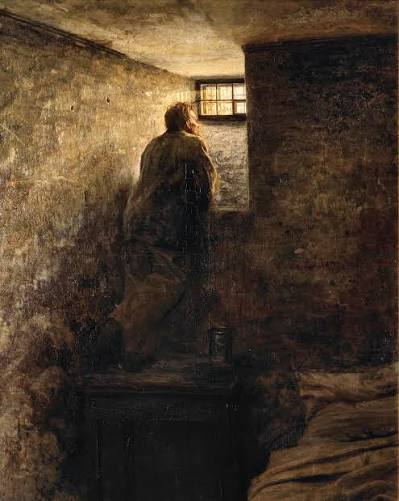
A Tale of a Prisoner
A prisoner confined in body may still feel free in mind. Through Foucault's account of power, language, and discourse, this essay locates freedom in the act of resisting the limits within which reality is conceived.
Decolonial philosophy
Feminist philosophy
Social philosophy
Toward a Feminist Critique of Patriarchal Mythopoesis: Counter-Logocentric Subjectivities and Biopolitical Embodiment in Cutrufelli, Carson and Doyle
Literature rewrites the myths that made women "ungrammatical" subjects. Through Carson's doubled Helen and Cutrufelli's four mothers, can auto/myth/biography restore women's epistemic agency, and reimagine surrogacy as a collective act?
Ethics & Moral philosophy
Phenomenology
Social philosophy
Between Self and Space: Dignity, Alterity, and the Modern Condition of Freedom and Reason in our Society
Pascal locates dignity in thought, but society invented the very concept of dignity. Drawing on Levinas's "face of the Other," this essay shows how digital life dissolves the ethical encounter, and why identity and alterity must be held together.
Existentialism
Political philosophy
Social philosophy
The Great Experiment of ‘Order’: A Devil’s Case for ‘Chaos’
Is political order humanity's noble achievement, or an illusion masking our inherent disorder? Adopting a devil's advocate stance, this essay draws on Hobbes, Plato, Hegel, Camus, and entropy to argue that chaos is the true order of things. It proposes resignation over revolt, accepting that all political structures eventually decline.
Philosophy of Power
Political philosophy
Social philosophy
Victim of Society or Freed for Anarchy?
Is anarchism a liberation from domination, or merely its mirror image? Reading Ibargüengoitia and Nietzsche, this essay traces social order to the primitive will to power, and locates the oppressor's fear in the strength of the different. It concludes that true anarchy is not the overthrow of norms, but the self-owned rejection of inherited values.

How Do I Submit My Essay?

Anyone is welcome to submit an essay, regardless of age, academic background, or topic. Philosium values originality, philosophical depth, and clarity.

No academic affiliation or publication history required.
Any philosophical topic, no exceptions.
Open 365 days a year, no deadlines.
Essays promoting violence, hatred, or harm will not be accepted.

How Submission Works

Submitting to Philosium follows a simple, transparent process — designed to respect both your time and the seriousness of your work.

1

Create your free account on philosium.com.

2

Write your essay directly in the Philosium editor — structure it freely, and edit it as much as you want before submitting.

3

Submit it for review, whenever you’re ready.

4

Our editorial team reviews it, following a public moderation charter available to everyone — expect a response within 72 hours.

5

Once validated, your essay is published — and remains editable even after going live!

There is no word limit or fixed method — every branch of philosophy, every tradition, and every mode of argument is welcome, from formal logic to dialogue to thought experiment.

Your work must be original. If you cite sources, include citations in-text or in a Works Cited section, using any style (MLA, Chicago, etc.), as long as the original authors are properly credited.

If an essay isn’t accepted, we explain why, and you’re welcome to revise it and resubmit. Please don’t hesitate to submit your work — we greatly appreciate your contribution.

Your edit request has been sent to our team for review.

Your delete request has been sent to our team for review.