Victim of Society or Freed for Anarchy?
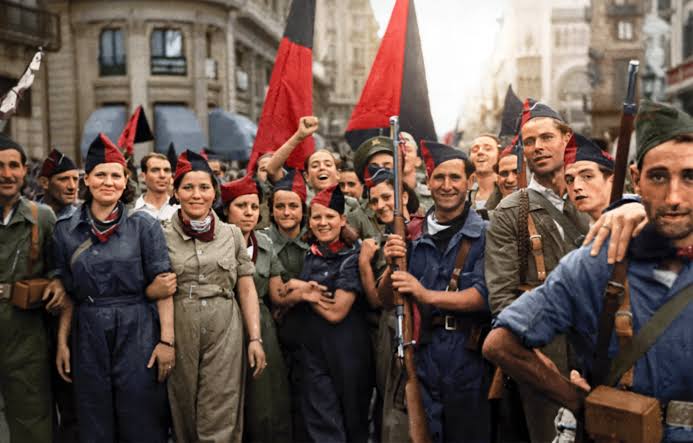
“The first essential characteristic of anarchism is the repudiation of the normative. The anarchist are enemies of all norms and, in principle, of all value. Law, morals, social conventionalisms, Religion appear before their eyes as arbitrary exigencies, born from ignorance, wickedness and fear”
Antonio Ibargüengoitia
Victim of society or freed for anarchy?
Society in the eyes of a norm has existed ever since the human being learned to speak for themselves and to reason on their own, evolving as a primary instinct to keep order among others, hiding its real purposes to a stranger´s eye and covering itself as a functional way of coexisting peacefully with other beings around them. It is as simple as it sounds, because since the very beginning of time, thinkers not only learned but managed to appropriate the mass they´re surrounded with, surging as a desire of “rightness” and growing thanks to the abilities the now sovereign has and the support the same mass gives them, not knowing they are actually supporting the theft of their individuality. In the end, the late thinker now sovereign not only controls but imposes a new thought of reality and excludes whoever does not fit in with it, taking away the integrity this mere called people still get the chance to keep, killing all forms of freedom someone enjoys of in every context that can be thought for.
Taking over a thorn apart society may seem intriguing and desirable for anyone at some point, however, for the oppressed part of that same society is rather than absurd, since their dreams are not to overcome the sovereign in turn and convert themselves into a new one but to overthrow their oppressor and to overcome themselves to live without the need of a norm, for them, living under the norm means to succumb to the fault of integrity and to disobey the human instinct of freedom by the individualism.
Thinking through the eyes of the “different” and the “outsider” may not seem interesting somehow, because everyone deep down wants to be the one in command and to have the right and the power to lead and control others with no doubt and hesitation, however, not everyone has the privilege neither the capacity of being the master of its reality and has to live as a follower of a bunch of values until it is finally their turn to take these norms like their own, and it could be certain to think that the easiest way is to be turned into just that, a follower and a pursuer of greatness through the values and morals society imposes, however, why would anyone prefer to be slave of their own moral than to be free without the need of a moral at all?
The origin of the need for superiority, the reason of exclusion for differences and originality in a social context and the overcoming from a mass to a single thinking form will be discussed on this essay through the next points:
I) The primitive need of feeling superior.
II) “Being different” seen as a mirage of power.
III) The death of a crowd and the birth of the one.
I. The primitive need of feeling superior
To understand the existence of an oppressive society, it is needed to acknowledge the origin of it, since these kinds of social matters always existed since the record human being has of their own existence, it is primary to ask why before assuming its core and roots.
Social matters would be nothing without the human being to guide them, since they are their creator and their only recurrent user, however, it is thinkable to enter an eternal debate in order to find the supposed reasons of its creation deep down the human´s mind, but actually is as simple as it is, nothing that comes from a human being can have an explanation that does not surround along the human being itself. Friedrich Nietzsche followed this question by his explanation of “will to power”, explaining that it is a mere instinct of the human to have a desire for power and to turn it into a need, and seeing it this way, the explanation of how human came with the idea of a society turned into control and oppression focuses primarily on the desire and the need of power, since primitively, human derivate from animals and have certain instincts that later become needs that are demanded to be seen, understood and applicated in order to make these beings satisfied, power being one of the most recent and strong ones, since power does not function without other people being around the needing person, it is demanded to be applicated whenever they are not alone and they are facing a challenge to overcome the one next to him even if it seems stronger than the needing one, as Nietzsche said, every time a human being faces another living form, it surges the urge to overpower them and to demonstrate its strength against them.
These needs can come from many places and it is more than interesting to analyze the human´s social behavior to find a response, because although it exists a primitively instinct to overcome everything that passes by, there´s a more manipulative reason of why to applicate power among their peers, since the human beings ever since their existence does not see themselves as the “strong one” among other species that are bigger and more imponent in the most literal way, being oppressed, bashed and brutally exterminated by this factor. It is this historical remorse and insecurity that humans had been charging throughout its evolution that makes them critically analyze the flaws and strengths of one another in order to use them in their favor, assuring to become the master even if they are not the most literally stronger or imponent and to hide the core of their reasoning, making the abused one the abuser.
II. “Being different” seen as a mirage of power
Following the core of oppression that pursues human being in every step they take, it is simple to assume that it is those same insecurities that make the needing of power the one to mark the one they see different to the concept their own need created of order, and it is a right supposition to make since the very beginning of the concept of society comes from power and sequentially power comes from a need coming from a latent insecurity, but the origin of the marking of the different ones among the norm is not the most intriguing part of it, but the similitudes that the oppressor and oppressed have in their motives to not coexist with one another.
Soren Kierkegaard created the concept of the “angst”, traduced to anxiety in English, to understand a state human recurs to whenever something is off with their environment normality, and even though Kierkegaard often exemplified it with the oppressed and confused part of the society not following the norm and the fear of the founding of the “true values” inside them, it can actually have a double perspective in a social matter such as empowering the sovereign to point into the ones that does not fit in, since the angst is not an exclusive feeling from one sector of population socially talking, it comes from the mere concept of anxiety, meaning the masters can also feel it and it could be even more reasonable to think that they are the ones to experience it rather than the ones that stand out, because the existence of these “fails” are not only an alteration of their perfectly thought system of orderly functionality but a provocation of this fear of not being able to overcome the other that overcomes them in the end.
It is not a matter of rage or pure hatred against the one that seems off to the master, but the fear of the capacities of the outsider to overcome the one oppressing them, it is this kind of angst that had moved dictators and violators to exterminate the ones they swear hate on, the reason for them to pick on the outsider is not because they seem weaker and easier to be changed, thorn apart and even annihilated, but because in the eyes of the master, they have strength and full capacities that can easily be used in order to dethrone them and steal their desire of superiority, and even if the one they are oppressing does not yearn for power, for them, it is a latent menace in order to achieve their most primitive desire and to control everything on their reach. In the end, is the strength of the different that scares the master, reminiscing into their own strength and reflecting that they are more similar than the master would ever admit.
III. The death of a crowd and the birth of the one
As it is well known and as the author expressed on the initial phrase, oppression from norms often if not always have anarchism as a consequence of the society normativity, and it is a manner to admire and to analyze the way those who come from the pointing out, the oppression and the extermination overthrow these ideas and norms and decide to live without them at all, the modern concept of anarchism is exclusive itself for the oppressor, not leaving them a chance to join the anarchism and to throw away themself the morals they are also a slave from, because in the end, the insecurities rooting into the violent responses of an normally correct society are nothing more than a prison for the one that chooses to follow the path of the raw and primitive needs of the desire to be superior.
Anarchism is rather than a social movement a mere social concept applied in political, social, economical and even systematical contexts, it can be also be used as an interpersonal process someone goes through in order to liberate themselves from all that is known into absolutely nothing at all, taking risks and a leap of faith. The one taking the leap of faith is no one more than the master themself, taking away all that they have been believing since they got use of reason, thinking it is their own set of beliefs, and in some cases it is, however, these needs, instincts and violence even if they are created in the core of the master´s thoughts, have the reason of their existence not in the mere occurrence of the masters mentality but in a reaction of a situation in the search for integrity among the ones that previously overcame them, choosing a particular path to do so.
Even though the masters morality is violent and denigrator for the one being in the oppressed side of the society normality, the process and the job of the master is not only to deconstruct these ideals but to completely destroy them, opening the door for a new form of thinking that rules with nothing at all, not talking in the literal way but in a way that the one in charge of those beliefs is nothing more than the one themself, choosing their own values without harming anybody in the process, not ruling anything or anyone one but themselves, overcoming nothing but themselves and finally becoming the anarchy version of what a master is seen like in society terms, becoming the overman for them and them only.
Conclusion
Being driven by the primitivism of willing and yearning the power is more common than most human beings would ever admit, it has historical, social and personal backlash behind the need of superiority and the rage of out calling someone that is different, but in the end, every single human being has been victim of the grief of the intern feeling of inferiority being expressed in the most harmful way to find, and not everyone is lucky enough to even notice that the core of the need to control a whole society is nothing more than a bunch of insecurities growing their way out them into harming everyone around them, but the ones that do notice and decide to throw away a whole system of beliefs for good not only fall out from being victims of the need of power but fall into a new system of beliefs that occurs to be nothing but themselves and their own values without imposing them to anything or anyone, being nothing more than owners of their own freedom, integrity and individuality, because in the end, being victim of the anarchy is not being victim of anything at all.