On the Truth-Aptness of the Perceived and of the Actual as Inspired by Rorty
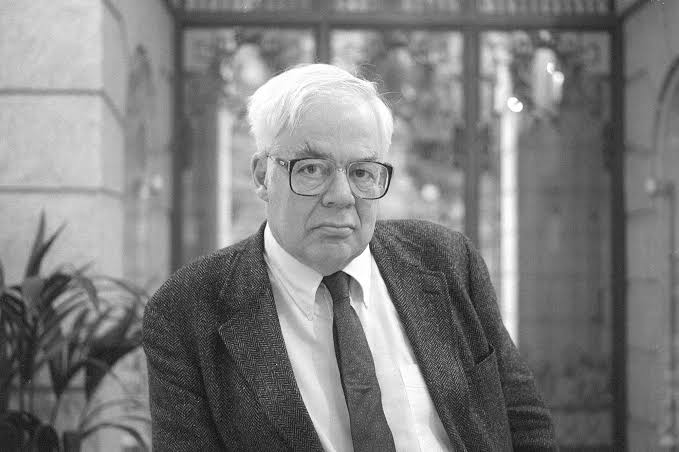
“Truth cannot be out there — cannot exist independently of the human mind — because sentences cannot so exist, or be out there. The world is out there, but descriptions of the world are not. Only descriptions of the world can be true or false. The world on its own — unaided by the describing activities of human beings — cannot.”
Rorty, R. (1989). Contingency, Irony, and Solidarity (p. 5). Cambridge: Cambridge University Press.
Introduction
It is possible to see how a deductively mannered frame of reference shapes the concluding thought on certain phenomena, per definitionem. The deductive logical apparatus considers the general premises of the system, and its result is the description or prescription of perceived phenomena. If one were to propose that the human mind inherently acts as a mechanism of conformation of actuality, be it in a pure Kantian sense, seemingly no perception conveyed by the human mind can transcend its limitation, due to the deductive nature of such systems of reasoning. More so, deeming the human perception of Nature as solely anthropocentric, it is possible to note that the human mind describes and prescribes phenomena.
Richard Rorty leaps further, stating that because describing and prescribing are processes inherent to the human mind, there are no inherent description and prescription appended to different phenomena in their actuality, if they were to reside on actuality on their own; further he notes that there is no truth-aptness inherent to actuality[1], as he deems truth-aptness to be a quality of a description, once again, tailored in accordance to the human mind:
“Truth cannot be out there — cannot exist independently of the human mind — because sentences cannot so exist, or be out there.”[2]
Such anthropocentric and further anti-realistic philosophical projects are possible within only a given frame of reference. Taking in regard the ‘anthropocentric’ frame of reference, we may ponder on its foundation and notice that it is unavoidably tinted by human sentiment, as figured in further text. We ponder on whether such limitations to perception can be transcended, possibly enabling one to grasp the actuality of Nature as it is by means of a different referential frame.
However, we propose and, in the latter text corroborate, that within the bounds of one given frame of reference, it is impossible to evaluate another. In simpler terms, we disagree with R. Rorty’s evaluation of ‘the world on its own’. We propose that a process of evaluating one reference frame through the other will always bring about incommensurability and redundancy. Such a result is logically unfulfilling, leaving the process incomplete. Aspiring to attempt at relating the anthropocentric reference frame to one that does not have anthropocentric first principles, we propose a plausible solution below and deem it is of utmost necessity to bring the essence of such conduction ad lucem.
I. Understructural Notation
The ‘anthropocentric’ referential frame of the perception of Nature is such a reference frame that is inherent to the human mind, it seems, meaning it is tinted by human sentiment. One may perceive a given phenomenon, and the process of one’s perception coupled by sentimental qualities shape a conscious conclusion[3].
Here, we propose two different roles of sentiment: either (1) one perceives something as it is, whatever that may be, and sentiment afterwards molds the conscious conclusion or that (2) sentiment initially shapes the process of perception. Such demarcation of the possible roles of sentiment, however, makes no difference in the importance of sentiment. As an illustrative point: no two persons think of a certain phenomenon in the same way; even if their conclusions align, we note that their processes of perception and evaluation of the perceived may differ largely.
As should be clear, sentiment is inherent to each mind, while being an individualistic and highly subjective trait. In regarding the mind within deterministic or fatalistic systems and if sentiment was essentially disproven as an ontological and further formative category, that does not challenge the fact that different minds perceive feel and think differently. Here, sentiment is what is regarded as a component which moulds the anthropocentric experience of the world, bringing to light the existence of vital perceptual limitations inherent to the human mind; that is, the unique sentimental experience shapes the reference frame through which the mind perceives Nature. It does not have to inherently be emotional, as it would not be fair to equate sentiment to reason or emotion; it represents purely the way a human mind wholly experiences what presents itself as actuality.
Further noting, the limitations of the sentimental frame of reference should not be likened to those of the senses; we are for centuries familiar with limitations of perception through the physical senses: we cannot perceive with our bare eyes that which e.g., emits, absorbs or reflects light outside of the visible spectrum of electromagnetic radiation; likewise, we cannot hear with our bare ears mechanical sound waves outside of the interval of human sound-wave perception.
For centuries, we have known this, hence we pondered upon whether we can ever truly know something as it is. We have sought refuge in constructing scientific instruments that seem as if they ‘transcend’ the limitations of the senses, maybe even the anthropocentric frame of reference as we have thought. Do they, however, rid us of the limits of our perception; does the mere usage of instrumentation transcend such limitations?
We perceive through instruments that which we cannot naturally perceive, yet through instruments we still do perceive in a purely human manner of perception; we do not transcend; we merely translate. Still, we merely translate phenomena to perceived sensual experience, and not sentimental.
We propose that the sentimental frame of reference[4] can never be forgotten, can never stay idle or be transcended, as it is inherent to the mind. Agreeing with R. Rorty to some extent, through such a referential frame we perceive the world, which does not in turn verify that we are perceiving actuality, as there are seemingly no free-standing conceptions like e.g. ‘truth’ in Nature as unaided by the human mind. However, we wish to illustrate that knotty problems arise when one tries to compare the proposed sentimental, anthropocentric frame of reference to those which have no anthropocentric component, i.e., when one tries to transcend the referential frame within it but is inherently bounded to what he deems is possible to transcend, in order to prove ad hoc that such transcendence is possible. In other words, how can one even endeavour at speaking of what exists or does not unaided by the human mind, if he is only to know of what is aided by it. We deem such projects insufficient, elaborating further.
II. Truth-Aptness of the Perceived and of the Actual
There is a quality of truth-aptness within the descriptions and prescriptions appended to phenomena when perceived by the human mind, within the bounds of the anthropocentric frame of reference. For clarity, one may perceive, or simpler, see a tree; one describes the tree and verifies whether or not that description aligns with the tree in question, therefore coupling sensual perception and reason; in other cases when describing a tree, we suppose, one may also couple emotion. The same reasoning can be applied to prescriptions of phenomena.
Through the collection of such processes, the mind systematically organises what it perceives, when sentiment serves a great purpose, as was mentioned previously. One, though, must ponder on whether such processes, such perception and reasoning (or simply the sentiment of the human mind) ever get to nick at actuality itself, if it were to exist unbounded by the anthropocentric frame of reference.
Were we to propose that there exists, in a Kantian manner, a world of noumena which we cannot possibly, through the sole human mind, acquire knowledge of, are we not providing redundancies when aspiring to describe Nature?
Yes, it may certainly seem we are; certainly, such “findings” fail to succumb to the principle of parsimony and such plurality – be it duality[5] of the perception of Nature – would seem redundant. Certainly it is, if left within the bounds of the anthropocentric frame of reference. We deem, however, that there is no way of determining whether they truly are!
This arises from the fact that there exists no logical causality in the relation ‘perception-actuality’ given by the said premises, as actuality does not have to align with the limitations of the world as perceived by the human mind. Likewise, there is no sounded foundation for attempting at describing ‘the world on its own’ as R. Rorty aims to:
“Only descriptions of the world can be true or false. The world on its own — unaided by the describing activities of human beings — cannot”;[6]
as there is ultimately no possible way of knowing that which lies outside of the scope of the sentimental i.e. anthropocentric frame of reference, as given by the pre-supposed premises.
However, reasonings such as Rorty’s may lead one to conclude that there are no inherent categories or qualities within objects outside of the human mind – even within other frames of reference for perception of Nature – or even to the conclusion that there is no world without a human mind to ponder upon it, as it must be perceived, described and prescribed; stating, however, any of such reasonings brings about no substantial descriptions of Nature as it is logically inconsistent. It says little of the proposed actuality as well.
Philosophical projects as such strive to transcend the sentimental frame of reference, all the while bounded by it as they have defined it! and therefore bring about proposals on the nature of actuality, which are inconsistent. While it may seem counter-intuitive to go down the path of stating that we cannot possibly state anything on actuality if our system has the premises R. Rorty has provided, one must strive, still, to be coherent. Aligning the reasoning on the perception of Nature coherently would, in the given case of anthropocentrism, be what was previously illustrated when refuting possible attempts of rebuttal of our thesis via the principle of parsimony, as well as when evaluating R. Rorty’s initial statement.
Conclusion
Firstly, we have defined any referential frame of perception as deductive by nature, by choice; we have laid down the foundation for the anthropocentric referential frame by seeking refugee within human sentiment we have proposed. By examining the statement presented by R. Rorty, we have attempted at illustrating the insufficiency of the argument on the nature of actuality intertwining with human perception presented.
As was mentioned, any aspiration to bring about conclusions about the measurability of different referential frames brings about incommensurability. From the purely anthropocentric referential frame, there seems to be no way for one to perceive something as it is in abstract, out-of-reach actuality. We deem that such findings do not present as a sufficient enough reason to bring about absolute conclusions on the nature of Nature, as R. Rorty’s seems to have done when stating that there are no descriptions inherent to phenomena when presented in actuality. As mentioned, surely, from the purely anthropocentric viewpoint, it must be the case; but as R. Rorty’s concluding sentence brings about remarks on ‘the world on its own’, we take firm ground in the rebuttal of the possibility of describing the abstract, out-of-grasp actuality while affirming the qualities of the world as perceived by man to be exclusively bounded to the mind.
For conclusive clarity, stating that there exist no inherent descriptions or prescriptions outside of the human reach is completely plausible. Leaping, on the other hand, to the conclusion that, because there exist no descriptions or prescriptions outside of the human mind, there exist no descriptions or prescriptions in actuality, presents itself as a bit of a slippery slope. Such aspirations we deem naïve. Of course, we are not proposing the solution to understanding actuality; one may with to explore other possibilities to his own accord.
Through the mechanism of actuality comprised of the never intertwining sentimental referential frames with some abstract and absolutistic one, we are merely working towards the refinement of the initially presented idea. Therefore, if we have already gone through the trouble of considering the statement by R. Rorty, we must examine its plausibility and probable limitations, which we believe we have attempted at in a conceivable manner.
Notes
[1] i.e. nature unbounded to the perceiver
[2] Rorty, R. (1989). Contingency, Irony, and Solidarity (p. 5). Cambridge: Cambridge University Press.
[3] regarding sentiment as the quality that makes one human; reason alone could not be sufficient for the definition, nor could emotions; therefore, we couple them
[4] also referred to as ’the anthropocentric frame of reference’
[5] if the only other frame of reference for perception of Nature is the one attributed to humans, i.e. anthropocentric
[6] Rorty, R. (1989). Contingency, Irony, and Solidarity (p. 5). Cambridge: Cambridge University Press.
References
Rorty, R. (1989). Contingency, Irony, and Solidarity (p. 5). Cambridge: Cambridge University Press.